


Fighting varicose veins at home is possible and justified only in the initial stages of the disease.All we can do on our own is to prevent the pathology from developing further and affecting the main veins, when surgical intervention is inevitable.To do this, it is necessary to comprehensively strengthen the vascular wall of the veins of the lower extremities.
Unfortunately, it is impossible to cure varicose veins at home without the use of invasive methods of intervention.But surgery can be avoided completely if therapy is started in a timely manner, when the first symptoms and changes in the vascular pattern appear.
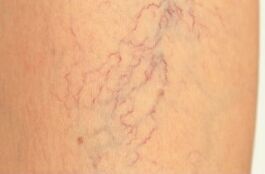
When will treatment for varicose veins at home be effective?
- first stages of the disease;
- after consulting the attending physician and discussing a possible combination of various methods;
- if there is a predisposition to the development of venous insufficiency at the genetic level or under certain working conditions.
To avoid possible complications and side effects, you cannot make decisions on your own.You must first be examined by a phlebologist, conduct an ultrasound of the lower extremities, establish the degree of venous insufficiency, collect all the accompanying anamnesis, and only after illuminating the full picture of the state of health, select complex therapy.
Traditional Treatments
Conservative traditional treatment methods mean the use of external agents that act locally, and the use of tablets that help strengthen the vessel wall from the inside.
With the help of ointments and tablets prescribed by a doctor, you can treat varicose veins at home, occasionally consulting with a specialist.
Creams and ointments
Treatment of varicose veins with home remedies for external use allows you to achieve a quick, lasting effect.Typically, creams and ointments are prescribed several times a year in courses, the duration of use and frequency of which depends on individual characteristics.The drug produces a visible effect only after several weeks of continuous use.
Thrombolytics and antiplatelet agents
Frequently used group of funds.The main active ingredient is heparin.This is a direct anticoagulant, the main task of which is to block the adhesion of platelets and the formation of micro-thrombi.By improving blood rheology, heparin also promotes better oxygenation and thropic tissue, and is used to prevent excessive “leakage” of plasma into the extracellular space.With long-term use, swelling goes away, skin color improves, pain and cramps are relieved.
Venotonic
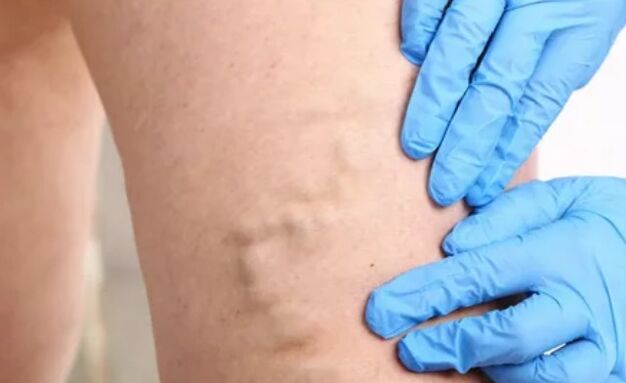
Venotonic drugs must be included in the treatment of venous insufficiency.Tablet forms for oral administration are more often used.But ointments are also popular.
The medicine has an angioprotective effect.Strengthens the vessel wall, restores valve function, preventing reflux.Thanks to Venotonic, varicose veins cannot be completely cured, but the disease can be prevented or its severity reduced.
Phlebotonics are divided into groups depending on the main active ingredient:
- flavonoids (replenishes missing elements for the regeneration of damaged cells);
- saponins (extract of horse chestnut, licorice, hazel, grape leaves);
- rutoside (P-vitamin activity stimulates contraction of smooth fibers);
- synthetic substances;
- combined means.
Glucocorticosteroids and NSAIDs
The remedies relate to symptomatic therapy.Nonsteroidal anti-inflammatory drugs are used to quickly relieve discomfort, because medicinal ointments will bring results in at least 2-3 weeks.The active ingredients penetrate into problem areas and inhibit inflammatory mediators, which eliminates pain, swelling and itching within an hour.
Cannot be used as monotherapy.
The ointment or cream should not be used for more than 2 weeks on an ongoing basis.This can cause addiction and suppression of local immunity, which leads to dermatitis or the development of fungal diseases.Contraindications to the use of topical NSAIDs:
- individual intolerance;
- age restrictions (see instructions);
- violation of the integrity of the skin at the site of application;
- dermatitis, dermatosis or other skin diseases at the site of application.
It is not recommended to use glucocorticosteroids on your own.Hormonal drugs have a huge number of side effects and contraindications, so they are used only when indicated when previously prescribed therapy is ineffective.
Tablets
The main oral medications used in the treatment of varicose veins are venotonic drugs.From within, they achieve their goals more slowly but more effectively.And they have a lasting, long-lasting effect.Regardless of the form of use, the medicine is aimed at eliminating identical problems.
Traditional medicine
You can treat varicose veins at home using traditional medicine.A prerequisite is complexity.For a full-fledged adequate fight, only folk methods are not enough.They can complement prescribed drug therapy.
There are a lot of techniques.But not all recipes for varicose veins at home will necessarily help.We must not forget that everyone’s body is different and the initial cause of the disease is also individual.You can rely on those recipes that help strengthen the vessel wall, make it stronger and more elastic.
Horse chestnut tincture
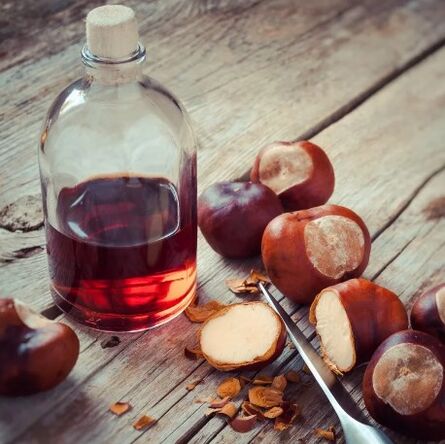
On the shelves of pharmacies there are now a countless number of tablets and ointments for veins, which include horse chestnut extract.However, this tincture can be prepared at home; it will help cope with swelling and pain.
To prepare, you will need 50 g of dry chestnut inflorescences and 1 liter of vodka.Mix in a glass container and leave for 14 days in a cool, dark place.You need to shake the resulting mixture daily.
Take 30 ml before each meal for 7-10 days.After a week's break, repeat the course.The expected effect will occur a month after the therapy.
Grated potatoes
To prepare puree for 1 procedure, you will need 5 potato tubers.Grate it and apply the resulting puree to the sore limb.Wrap your leg in polyethylene and top with a towel.After 4 hours, remove the compress and wash the skin with clean warm water.If there are no unpleasant sensations after the compress, you can carry out the procedure once every 2 days for 2-3 weeks.
Tincture of Kalanchoe pinnate
To prepare the solution, you need to fill a liter glass jar halfway with the leaves of the plant.Then fill with septal (70% alcohol) or moonshine to the top.Leave the jar for 2 weeks in a dark place, stirring the mixture occasionally.The resulting tincture can be used both internally and externally.
Soak the gauze in the solution, make a warm compress (put polyethylene and a warm towel on the gauze) for 2 hours.For oral administration, take 30 drops orally before meals, 1 time in the morning.The duration of the course is 1 month.
Hop decoction
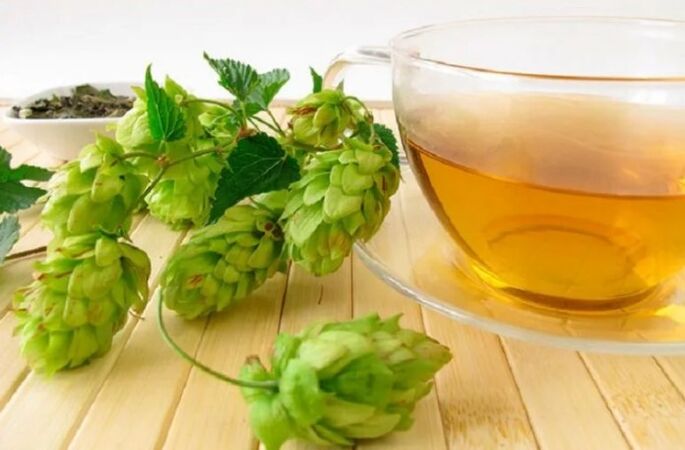
To prepare the mixture, you need to grind the hop cones.Pour 1 tablespoon into 200 ml of boiling water and place in a water bath.Simmer for 30 minutes.Then let it cool.Divide the resulting decoction into 3 servings and take 3 times a day a few minutes before meals.The average course duration is 1.5 months.
Apple cider vinegar
The product is used simultaneously inside and outside.For external use, undiluted vinegar is applied along the entire length of the legs and left for several hours under gauze, after which it is washed off.Apply 1 time per day.
For internal use 1 tbsp.a spoonful of vinegar is diluted in 1 glass of purified water at room temperature and drunk on an empty stomach (if there are no problems with the acidity of the gastrointestinal tract).The duration of treatment is usually 1-2 months.
Lilac flower tincture
Fill a glass jar halfway with dry or fresh lilac flowers.Fill to the top with septal or moonshine.Infuse the solution for 7 days in a cool, dark place.Use only externally.Every evening for a month before going to bed, rub the lower limbs along the entire length with the resulting tincture.
Arnica and hazelnut decoction
To prepare the decoction, take a tablespoon of crushed arnica and forest oak bark.Pour 150 ml of boiling water and bring to a boil over low heat.Then leave for 8 hours covered in a dark place.
Take 50 ml orally before each meal.The average course duration is 3-4 weeks.All these methods are best used after consultation and agreement with the treating doctor.If new unpleasant symptoms appear associated with starting to use one of the traditional methods, you should immediately stop the procedures and consult a doctor.
Useful expert advice
How to improve blood circulation and how to reduce pain?These 2 burning topics can be combined into one section because they are interrelated.
The consequence of varicose veins is a disruption of the normal speed of blood flow.The consequence of poor circulation is pain.We restore blood flow and get rid of pain.To quickly relieve pain, of course, you can resort to NSAID ointments, which are described above.But we need to approach this problem more thoroughly - get rid of the cause.To improve blood circulation, in addition to the main therapy, a general approach is necessarily important.Solve problems with nutrition, physical activity and routine in general.
You need to give up harmful foods
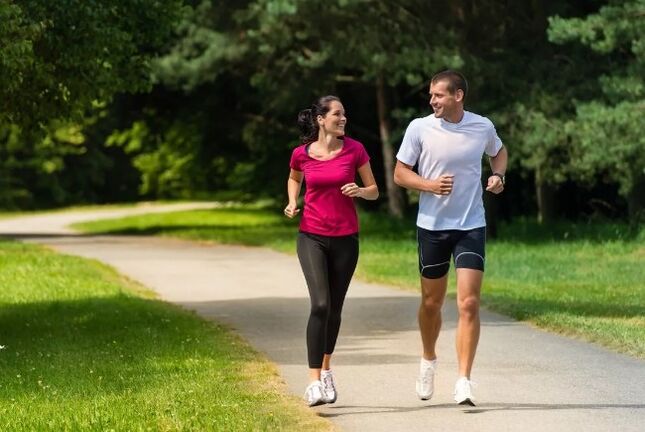
You should always engage in physical activity.Yes, with varicose veins there are restrictions on this matter.But you need to engage in those sports and exercises that are allowed: light running, walking, dancing, swimming, cardio, strength training at the amateur level.Muscles should always be in good shape so that they help pump blood to veins devoid of smooth muscle.Nutrition plays an important role in tissue regeneration and harmful external influences, corrects excess weight and excessive stress.And eliminating fatty foods, soda, unlimited amounts of sweets and starchy foods, and fast food will improve your overall condition and give you pleasant lightness.
Compression garments must be approved and selected by the attending physician, taking into account the load, activity and degree of injury.You can remove varicose veins at home in the early stages - it is important to love your body and want to be healthy.Only then will the results not be long in coming, and innovations will not seem like torture.